
Fatty Liver: The Silent Problem Hiding on Your Plate
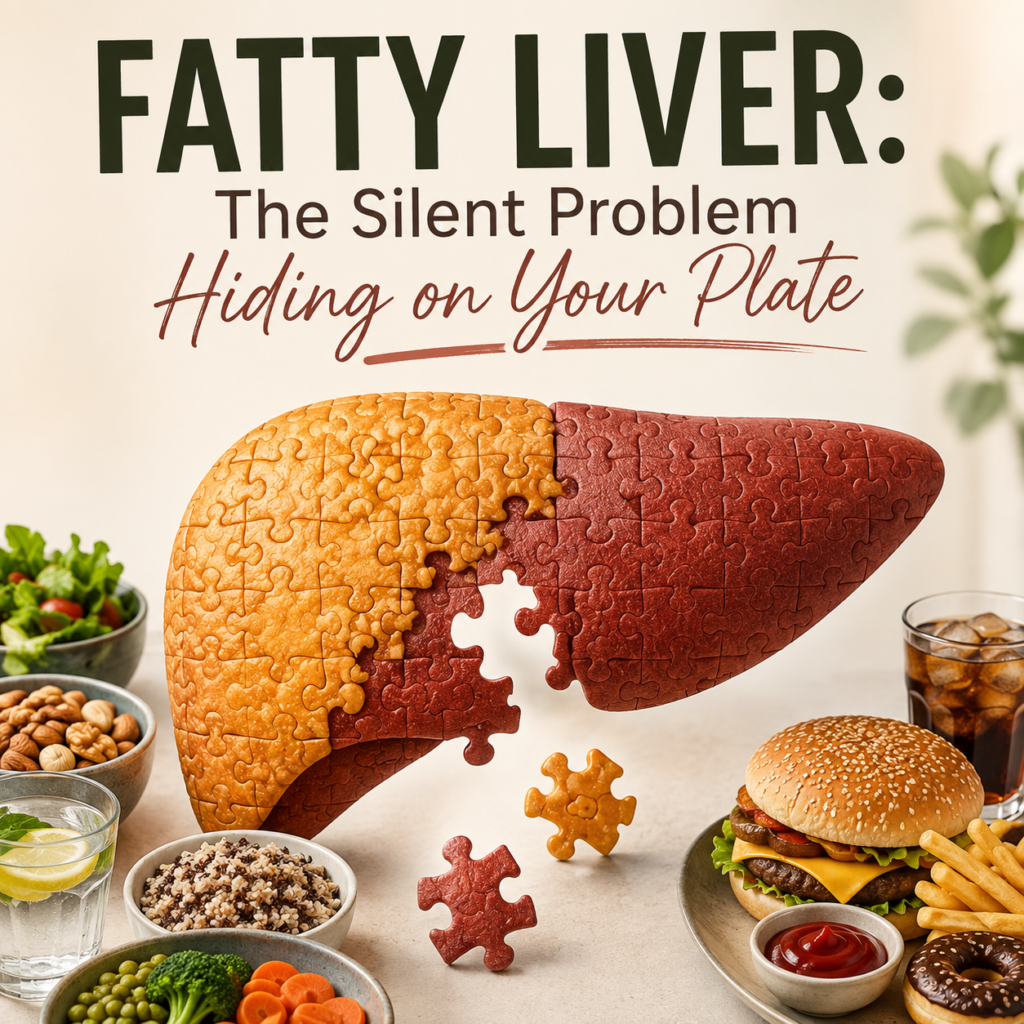
You don’t need to drink alcohol to develop fatty liver.
You don’t need to be overweight either.
And surprisingly, you may not even have a single symptom.
That’s what makes fatty liver so tricky—it can quietly develop while you feel completely fine.
Your liver is one of the hardest-working organs in your body. It helps process nutrients, regulate metabolism, store energy and remove harmful substances. But when excess fat starts accumulating inside liver cells, the liver can begin to struggle.
So, what exactly is fatty liver?
Fatty liver means that excess fat has accumulated in the liver.
The condition is commonly associated with metabolic dysfunction, including excess body weight, insulin resistance, type 2 diabetes, abnormal cholesterol or triglycerides, and an inactive lifestyle.
And here’s the important part:
Fatty liver is not just a “liver problem.” It is often a reflection of what is happening throughout your metabolism.
“But I don’t eat much oily food…”
This is one of the most common misconceptions.
Fatty liver isn’t simply caused by eating fried food or consuming dietary fat.
Your liver can also convert excess calories: particularly from refined carbohydrates and added sugars into fat through a process called de novo lipogenesis.
So the bigger question isn’t simply:
“How much fat am I eating?”
It is: “What does my overall diet, activity level and metabolic health look like?”
A daily combination of sugary drinks, sweets, refined carbohydrates, oversized portions, frequent snacking and very little physical activity can create the perfect environment for fat accumulation in the liver.
The scary part? You may feel absolutely normal.
Fatty liver can be completely silent.
Some people may experience tiredness or vague discomfort in the upper right side of the abdomen, but many have no obvious symptoms at all.
That means waiting for symptoms isn’t a good strategy.
Sometimes fatty liver is discovered accidentally during an ultrasound, routine blood tests or an evaluation for another health concern.
Can fatty liver be reversed?
In many people, yes, especially when it is identified early.
And the treatment doesn’t begin with an expensive “liver detox.”
It begins with something much more ordinary:
Your everyday habits.
For someone who is overweight or has obesity, even modest, sustained weight loss can improve liver fat, while greater weight loss may provide additional benefits for liver inflammation and fibrosis.
But please don’t interpret this as:
“Eat less and lose weight as quickly as possible.”
Crash diets are not the answer.
The goal is sustainable fat loss while maintaining adequate protein, nutrition and muscle mass.
Your liver doesn’t need a detox. It needs a better environment.
There is no magic juice, powder or supplement that can replace healthy lifestyle habits.
Instead, think about building a liver-friendly plate.
🥗 Fill your plate with:
- Plenty of vegetables
- Whole fruits in sensible portions
- Whole grains and high-fibre carbohydrates
- Pulses, beans and legumes
- Adequate protein
- Nuts and seeds in appropriate portions
- Healthier sources of dietary fat
And reduce:
- Sugar-sweetened beverages
- Excess added sugar
- Refined carbohydrates
- Ultra-processed foods
- Frequent fried foods
- Excess calories
- Large portions
- Alcohol, where applicable
The goal isn’t to create a “perfect diet.”
The goal is to create a diet you can actually follow.
What about rice, roti and potatoes?
No, you don’t automatically have to eliminate them.
This is where many internet diets become unnecessarily restrictive.
The issue is often portion size, food quality and the overall dietary pattern, rather than one particular food being responsible for fatty liver.
A balanced Indian meal can absolutely be part of a liver-friendly lifestyle.
Think: Roti/rice + vegetables + dal/beans + curd/paneer/egg/fish/chicken + salad
Rather than: Large carbohydrate portion + little protein + sugary drink + dessert.
Small changes in the entire meal pattern can matter much more than demonising one food.
And exercise?
Your liver loves movement.
Regular physical activity can improve metabolic health and reduce liver fat, even when significant weight loss doesn’t occur.
You don’t necessarily need an expensive gym membership.
Walking, cycling, strength training, swimming, dancing or any activity you enjoy can be a good starting point.
A particularly useful combination is: Aerobic activity + resistance/strength training.
Because protecting muscle is just as important as reducing excess fat.
The biggest mistake?
Thinking: “My fatty liver isn’t serious, so I’ll deal with it later.”
Fatty liver exists on a spectrum.
For some people, it remains relatively uncomplicated.
For others, it can progress to liver inflammation, fibrosis, cirrhosis and, in some cases, liver cancer.
Not everyone progresses but ignoring the condition isn’t a good strategy.
Your doctor may recommend blood tests, imaging and/or assessment of liver fibrosis depending on your individual risk factors.
The good news?
Your liver is remarkably resilient.
And sometimes the most powerful “liver treatment” isn’t hidden in a bottle.
It is hidden in the choices you make repeatedly:
What you put on your plate.
How much you move.
How well you sleep.
How you manage your weight and blood sugar.
And whether you choose consistency over quick fixes.
So, if you’ve recently been told: “You have fatty liver.”
Don’t panic.
Don’t start a juice cleanse.
Don’t completely stop eating carbohydrates.
And don’t wait for symptoms.
Start by understanding why it happened—and then work on changing the factors that can be changed.
Because your liver may be silent…
but it is always paying attention.Â
If you have been diagnosed with fatty liver, your diet and treatment should be individualised according to your weight, diabetes status, lipid profile, liver health and other medical conditions. Consult your doctor and a qualified clinical nutrition professional for personalised advice.



Dr. Gurmaheshinder singh
September 1, 2026 at 11:34 amFatty liver disease (also known as steatotic liver disease) occurs when excess fat builds up in liver cells. While it is normal for the liver to contain small amounts of fat, if fat accounts for more than 5% to 10% of the liver’s total weight, it is considered a fatty liver.
Ms. Gurbrinder Kaur
September 1, 2026 at 1:19 pm“Absolutely, you’re right. Fatty liver (steatotic liver disease) refers to excess fat accumulation in liver cells, and it is generally identified when hepatic steatosis exceeds about 5%. Thank you for adding this important clarification to the discussion.â€